Water is everywhere in the food and beverage industry. It flows through production facilities, ensures hygiene, regulates temperatures in processes, cools systems, and often even becomes part of the product itself. That is precisely why water is not a minor issue in this industry, but one of the decisive factors in ensuring that processes run reliably and that a consistently high-quality product ends up on the shelf. 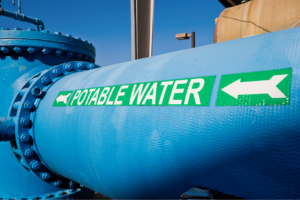
The problem is that water only becomes noticeable when it causes problems. When deposits suddenly appear, cleaning becomes necessary more and more often, or process parameters change. When wastewater values are exceeded or costs rise due to consumption and the use of chemicals. Then it quickly becomes clear that water is not just a resource. It is an important factor that must be actively managed.
Translated with DeepL.com (free version)
Hygiene and process stability
The food and beverage industry rightly has particularly high standards. After all, hygiene is essential in this industry. At the same time, everyday life in production facilities is demanding: water passes through many stages, such as pipes, tanks, heat exchangers, and different temperature ranges. It is precisely these changing conditions that make biofilm easy. If the water quality fluctuates or the operating mode is not optimally adjusted, microbiological growth can develop more quickly and possibly become established.
Biofilm is much more than just a “dirt problem.” It can impair heat transfer, lead to microbiological risks, and at the same time massively increase cleaning costs. The result is more frequent cleaning, higher chemical and water consumption, and, in the worst case, production interruptions.
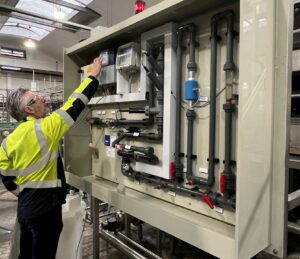 The key, therefore, is not to “clean more,” but to monitor better and control more precisely. This is exactly where INWATEC comes in: With the INWAsense biofilm sensor, biofilm formation can be measured continuously. In addition, the INWATROL expert water monitor ensures that water quality is monitored. The measured parameters can be adapted to the respective plant and application. Typical examples are pH value, conductivity, redox potential, and other relevant process parameters. This not only generates data, but also provides a real basis for decision-making: When is intervention necessary? And when can you safely continue?
This is particularly evident in areas where heat and water come together, such as in pasteurizers. Practical experience has shown that continuous biofilm monitoring and data-based treatment can help to significantly extend cleaning intervals. At a large brewery, this concept was used to extend the cleaning frequency of a pasteurizer from two weeks to six to eight weeks while maintaining stable hygiene and process reliability.
Many companies only react to water problems when symptoms become visible: rising consumption, deposits, biofilm, fluctuating values, or limit values being exceeded. However, in modern production environments, “reacting” is often the most expensive strategy because it usually involves unplanned downtime, increased cleaning costs, or quality risks.
Wastewater and resources
The food and beverage industry is not only water-intensive, but also frequently produces highly contaminated wastewater. Proteins, fats, starch, and sugar result in complex wastewater streams whose composition can vary greatly depending on the product, production phase, and cleaning process. The result: the effort required to achieve stable discharge values and economical treatment increases, as do costs.
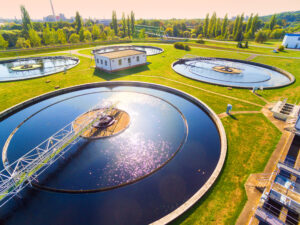 INWATEC supports companies with coordinated processes and products for wastewater treatment, for example through flocculation and targeted separation of solids and liquids. Especially in wastewater with high organic loads, polymers help to bind solids, improve wastewater quality, and make the processes more economical and sustainable overall.
It is important to note that the food and beverage industry has high requirements. Not only in terms of hygiene and effectiveness, but also in terms of the permissibility of the products used. INWATEC therefore uses its own specially developed food-compliant products that meet the legal requirements for applications in the food and beverage industry and are designed for the conditions of this sector.
Steam boilers
In addition to hygiene and product quality, water also plays a crucial role in steam boilers. Steam is indispensable in the food and beverage industry for heating processes, pasteurization, sterilization, and cleaning. This makes the consequences all the more serious if the water quality in the boiler system is not right.
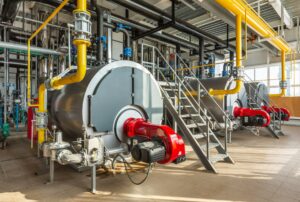 Deposits, corrosion, or foaming in the steam boiler not only lead to higher energy consumption, but can also jeopardize operational safety and cause unplanned downtime. Even a few millimeters of scale act as an insulating layer and significantly increase energy consumption. At the same time, maintenance costs and the risk of damage to boilers, fittings, and downstream systems increase.
Here, too, problems usually develop gradually and are often only recognized when efficiency losses or malfunctions are already noticeable. Targeted water treatment and continuous monitoring of the relevant parameters are therefore crucial for operating steam boilers efficiently, safely, and durably.
INWATEC supports operators with coordinated concepts for boiler water treatment. These include specially developed products to prevent deposits and corrosion, as well as monitoring solutions that allow boiler-relevant water parameters, such as the oxygen content in the water, to be continuously monitored.
Practical solutions for food & beverage
INWATEC supports companies in the food and beverage industry with tried-and-tested concepts for water and wastewater treatment that focus on process stability, hygiene, and resource efficiency. This is not about individual solutions, but rather the interplay of water quality, monitoring, targeted treatment, and documentable processes adapted to the requirements of the respective production.
Whether biofilm monitoring with INWAsense, continuous water quality control with INWATROL expert, or specially developed products for use in the food & beverage environment: our goal is always the same: to manage and treat water in such a way that hygiene is maintained, systems run smoothly, and resources are measurably conserved.
If you would like to optimize your water management, we are happy to support you. From analysis and design to ongoing support.